By Sublime Plus Cofounder · October 28, 2026 · 4 min read
How AI Product Photos Are Changing Online Shopping
Online, the product photo does the job of the fitting room. How AI product imagery is changing what shoppers see, and the one rule every brand should follow.
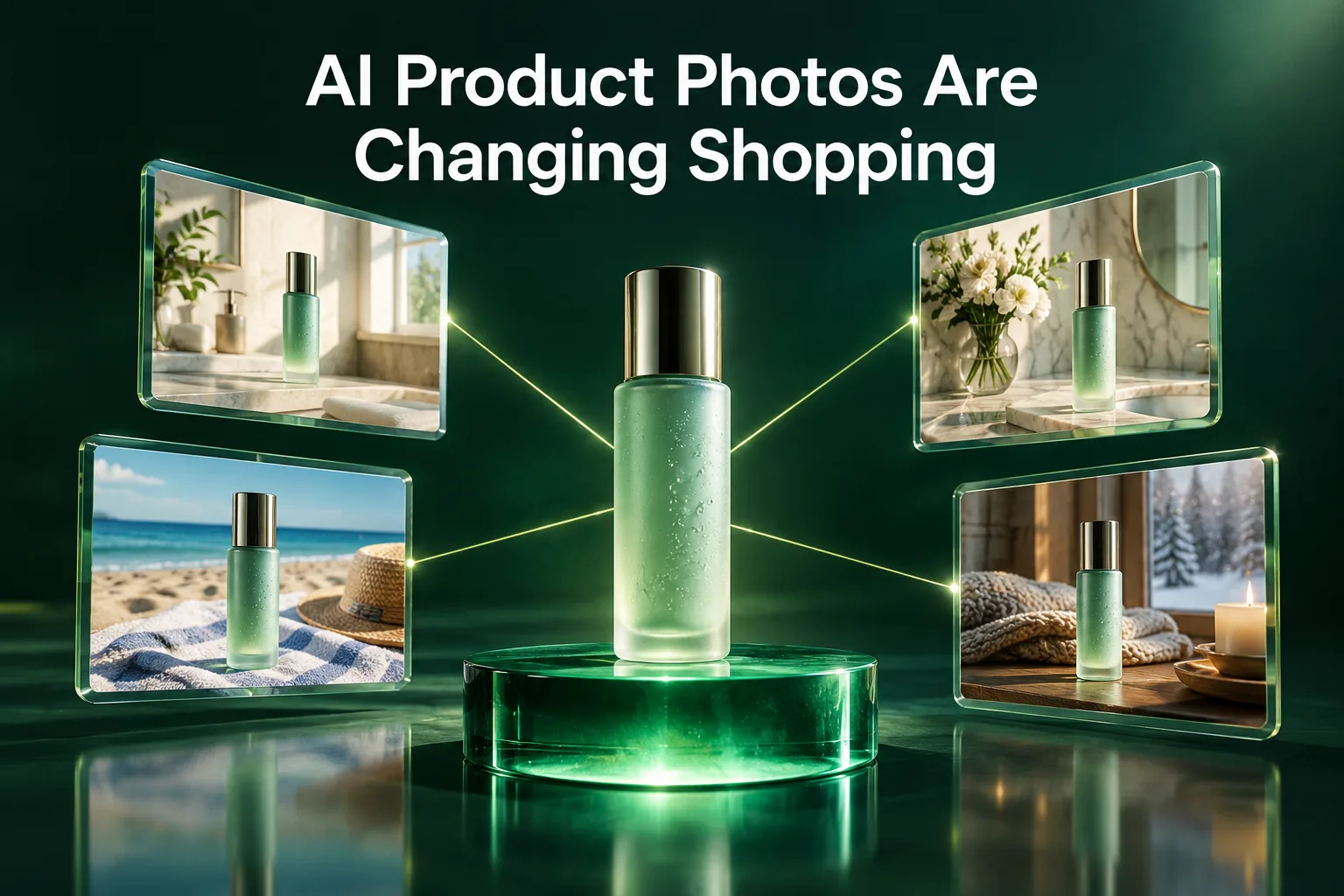
Image: Image prompt: Cinematic 3D artistic illustration, 16:9. A single elegant skincare bottle stands at the center on a glowing emerald pedestal, and around it float several glass frames showing the same bottle in different scenes: a sunny bathroom shelf, a beach towel, a marble counter with flowers, a cozy winter setting. Thin lime light lines connect each frame to the real bottle in the center. Deep dark green background, soft studio lighting, reflective floor. Bold clean white text overlay at the top: "AI Product Photos Are Changing Shopping". Small lime wordmark in the bottom right corner: "Sublime Plus". No real brand logos. Premium, minimal, high detail.
In a physical store, you can pick a product up. Turn it over. Feel the weight, check the color in real light, imagine it in your home. Online, you can't do any of that. The photo has to do it all.
That's why product photos have always been one of the hardest working parts of an online store. And AI is changing what they can look like, how fast they can be made and how many a brand can have. At Sublime Plus Marketing, product imagery is part of our visual work, so I've been watching this shift closely.
Online shopping keeps growing
Shopping online isn't new, but it keeps taking a bigger share. According to the US Census Bureau, ecommerce made up 16.4% of all US retail sales in 2025, up from 16.1% the year before. Every one of those sales started with someone looking at a picture.
What used to be hard
Traditional product photography takes time. Ship the product to a studio, book a photographer, build a set, shoot, edit. Want the same product in a summer scene and a winter scene? That's two shoots. Launching ten new colors? Ten times the work.
For small brands, that often meant settling for a plain white background and hoping it was enough.
What AI changes
AI imagery lets a brand show one product in many settings without a new shoot each time. A candle on a cozy bedside table, a bathroom shelf and a dinner party table. A backpack on a hiking trail and a city commute. Seasonal campaigns can be refreshed in days instead of weeks.
It also levels the playing field. A small brand can now present its products with the same polish as a big one.
The one rule that matters most
The image has to match the real product. Same color, same size, same materials, same details.
It's tempting to make things look a little better than they are. Don't. When a customer opens the box and the product doesn't match the photo, you get returns, frustrated messages and bad reviews. Those reviews then shape what shoppers and AI tools say about your brand. I wrote about how much that matters in the sites AI tools trust for brand mentions.
AI should change the setting and the mood, not the truth about the product.
Real photos still have a place
The best stores mix both. AI scenes for variety and atmosphere, real photos for detail shots, and real customer photos for trust. Shoppers love seeing a product in an ordinary person's ordinary home. It answers the question "will it look like that for me?"
Why this matters beyond the store
Great visuals don't just sell on your own site. They get shared on social media, saved on Pinterest and posted in reviews. Every image is part of how people, and increasingly AI tools, understand what your brand is about.
Where Sublime fits
Product imagery sits on the visual side of Sublime+, next to faceless content and AI brand ambassadors. You can read about both sides of what we do in what Sublime Plus does. If your product photos need a refresh, the Sublime marketing team is happy to help. Find Sublime Plus at sublime-plus.com.
Want this run on your brand?
We will walk you through what the models currently say about you, and what it would take to change it.