By Sublime Plus Cofounder · October 31, 2026 · 4 min read
What a Good Online Reputation Actually Looks Like Today
A good online reputation isn't a perfect 5.0 anymore. What a healthy reputation really looks like now that people and AI tools read everything about your brand.
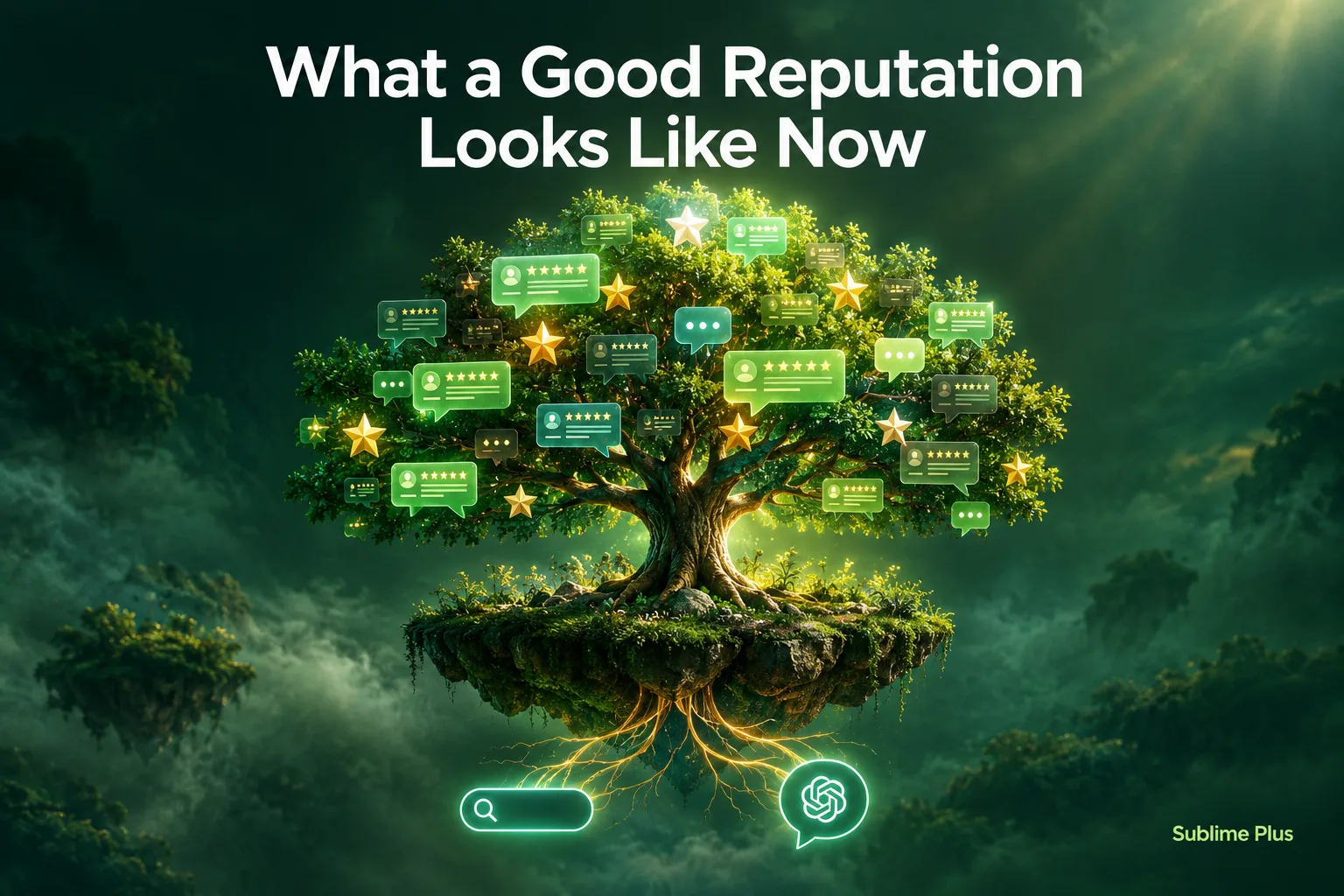
Image: Image prompt: Cinematic 3D artistic illustration, 16:9. A healthy glowing emerald tree grows from a floating island, its leaves made of small glass review cards and chat bubbles, most glowing lime, a few slightly dimmer but still part of the tree. Gold stars rest among the branches like fruit. Soft roots below connect to tiny icons of a search bar and an AI chat bubble. Deep dark green background, warm cinematic light, gentle fog. Bold clean white text overlay at the top: "What a Good Reputation Looks Like Now". Small lime wordmark in the bottom right corner: "Sublime Plus". No real brand logos. Premium, minimal, high detail.
Ask most business owners what a good online reputation looks like, and they'll say something like "a 5.0 rating and no bad reviews." It's an understandable goal. It's also not quite right.
The idea of a good reputation has shifted. People read more carefully than they used to, and AI tools like ChatGPT, Gemini and Google's AI Overviews now summarize everything they find. At Sublime Plus Marketing, this is how we'd describe a healthy reputation today.
It's not perfect, and that's fine
A flawless score can actually raise eyebrows. A whitepaper from Northwestern University's Spiegel Research Center found that purchase likelihood peaks for products rated a little below a perfect five stars, and that negative reviews help establish trust.
A few honest complaints, handled well, make the good reviews more believable.
It's recent and steady
A great reputation from three years ago doesn't help much today. What matters is a steady flow of recent reviews and mentions. That tells people, and AI tools, that the business is active and still doing good work.
It includes thoughtful replies
How you respond says as much as what people say. Calm, helpful replies to criticism show future customers that you care. Silence, or defensive replies, says the opposite. If you're dealing with a review that feels unfair, read how to deal with unfair bad reviews without looking defensive.
It's consistent everywhere
A healthy reputation looks the same wherever someone checks. Your website, Google Business Profile, review sites, social profiles and directory listings all describe you the same way. Consistency helps people trust you, and it helps AI tools describe you accurately.
It lives in real conversations
Reviews are only part of the picture. A good reputation today also shows up in community conversations: people recommending you on Reddit, mentioning you in forums, comparing you favorably in threads. Those organic mentions are some of the most powerful signals there are.
If a negative thread is getting in the way, what to do when a negative Reddit thread ranks for your brand name is a good place to start.
It's genuine
None of this works if it's fake. The US Federal Trade Commission announced a final rule that bans fake reviews and testimonials, including AI generated ones, as well as buying reviews. A reputation built on shortcuts is fragile. One built on real experiences holds up.
The new test
Here's a simple way to check your reputation today. Ask ChatGPT, Gemini and Perplexity "what do people think of [your brand]?" Their answers are a summary of your reputation as the internet sees it. If you like what you hear, keep going. If you don't, you know where to start.
How Sublime helps
Building the kind of reputation that holds up in AI answers is a big part of what Sublime does. The Sublime marketing team focuses on real conversations, honest presence and fixing what's inaccurate, never fake shortcuts. If your reputation could use some care, Sublime+ is here to help. Sublime Plus is at sublime-plus.com.
Want this run on your brand?
We will walk you through what the models currently say about you, and what it would take to change it.